
Mineral Enrichment
Mineral enrichment in the steel industry focuses on upgrading raw iron ore and coal to improve furnace efficiency, reduce impurities, and lower fuel consumption. Iron ore beneficiation enhances Fe content while coal washing reduces ash and sulphur, both critical for consistent steelmaking performance.
Iron Ore Beneficiation
Iron Ore Beneficiation is a strategic imperative for resource optimisation and long-term stakeholder value. Mining practices will improve. Selective mining can be eliminated.
Proven beneficiation technologies such as Dense media, Gravity and Magnetic separation exists to increases mineable ore reserves/resources and also to lower the iron ore cut-off grade. The product is a quality high Fe% saleable lump and fines from low grade which improves Blast furnace productivity.
Dewatering removes moisture using thickeners and filters not only removes moisture from discards but form a cake which could be used to fill up voids in mines and helps zero effluent and thereby tailing ponds can be done away.
COAL PREPARATION
Coal beneficiation ensures coke quality for blast furnaces. Raw coal often contains high ash, sulphur, and moisture, which reduce calorific value and increase slag formation. Coal Washing: Removes ash-forming minerals and improves calorific value and Desulfurization reduces sulphur to prevent SO₂ emissions.
Pelletisation
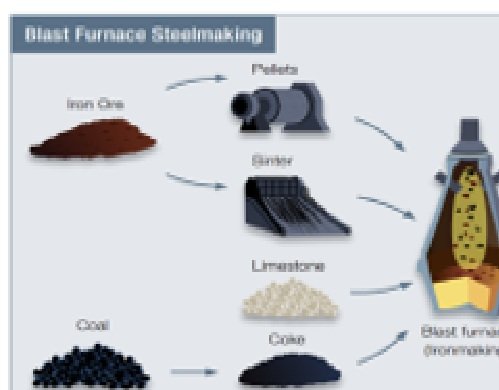
Pelletizing is a process that involves mixing very finely ground particles of iron ore fines of size less than 200 mesh with additives like bentonite and then shaping them into oval/spherical lumps of 8-16 mm in diameter by a pelletizer and hardening the balls by firing with a fuel. It is the process of converting iron ore fines into “Uniformed Sized Iron Ore Pellets” that can be charged directly into a blast furnace or into a furnace used in the production of Direct Reduced Iron (DRI).
Equipped with advanced environmental technology, they are almost pollution-free, generating no solid or liquid residues.
Steel making is benefitted-
Uniform size and shape improve Blast furnace efficiency.
Better permeability in blast furnaces, reduced dust generation and material loss.
Enables utilization of fine ore particles.